Psychological Investigations

  • Uniqueness and psychopathology – Part III (symptoms, signs, markers and contributing factors)
    The physical world (universe) does not get “ill” or have “symptoms”, it is normal (“healthy”) as it is. Life, however, with survival, adaptation and learning (memory) at its core, brings in the possibility and the inevitability of dysfunction, illness (disorder) and demise (death). Physical disorders (illness, dysfunction) are part of life and death. Psychopathology, an…

    Continue reading

  • Personality, the Self and the I
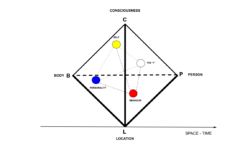
    “Personality”, the “Self “and the “I” are three distinct aspects of one’s UNIQUENESS. “PERSONALITY” is a neurocognitive endophenotype embedded in one’s body and the brain, the “SELF” is an aggregated representation of oneself (image, schema, narrative, identity) encoded in one’s memory and the “I” is one’s awareness (sensory representation) of oneself in the present moment…

    Continue reading

  • Uniqueness and psychopathology – Part II
        We are threatened with suffering from three directions: from our own body, which is doomed to decay and dissolution and which cannot even do without pain and anxiety as warning signals; from the external world, which may rage against us with overwhelming and merciless forces of destruction; and finally from our relations to other…

    Continue reading

  • “Personality disorders” as clusters of relational vulnerabilities 
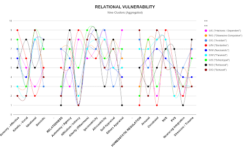
    Summary: Relational vulnerability is a continuous epigenetic dimension of interpersonal psychopathology (“disorders of personality”) manifesting in four main endophenotypic clusters based on (i) disordered HOMEOSTATIC REGULATION (High / Low) and (ii) maladaptive RELATEDNESS (High / Low). Currently used categories (diagnoses) of “personality disorders” correspond to one of the four clusters (See Table RV-4 below)  …

    Continue reading

  • Ipsocentricity (2022)
    Psychopathology is an epi-ontogenetic disturbance (disorder) of associative integration manifested in impairments (symptoms, signs) of Homeostatic Regulation (activation, emotionality, neurocognitive integration) and Interpersonal Relatedness (Self-Others, intersubjectivity). Homeostatic dysregulations are associated with the biophysical (biological) aspects of psychopathology and dysregulated Relatedness underlie its interpersonal manifestations. Ipsocentricity (focus on oneself) is a central aspect of relatedness and…

    Continue reading

Comments are closed.